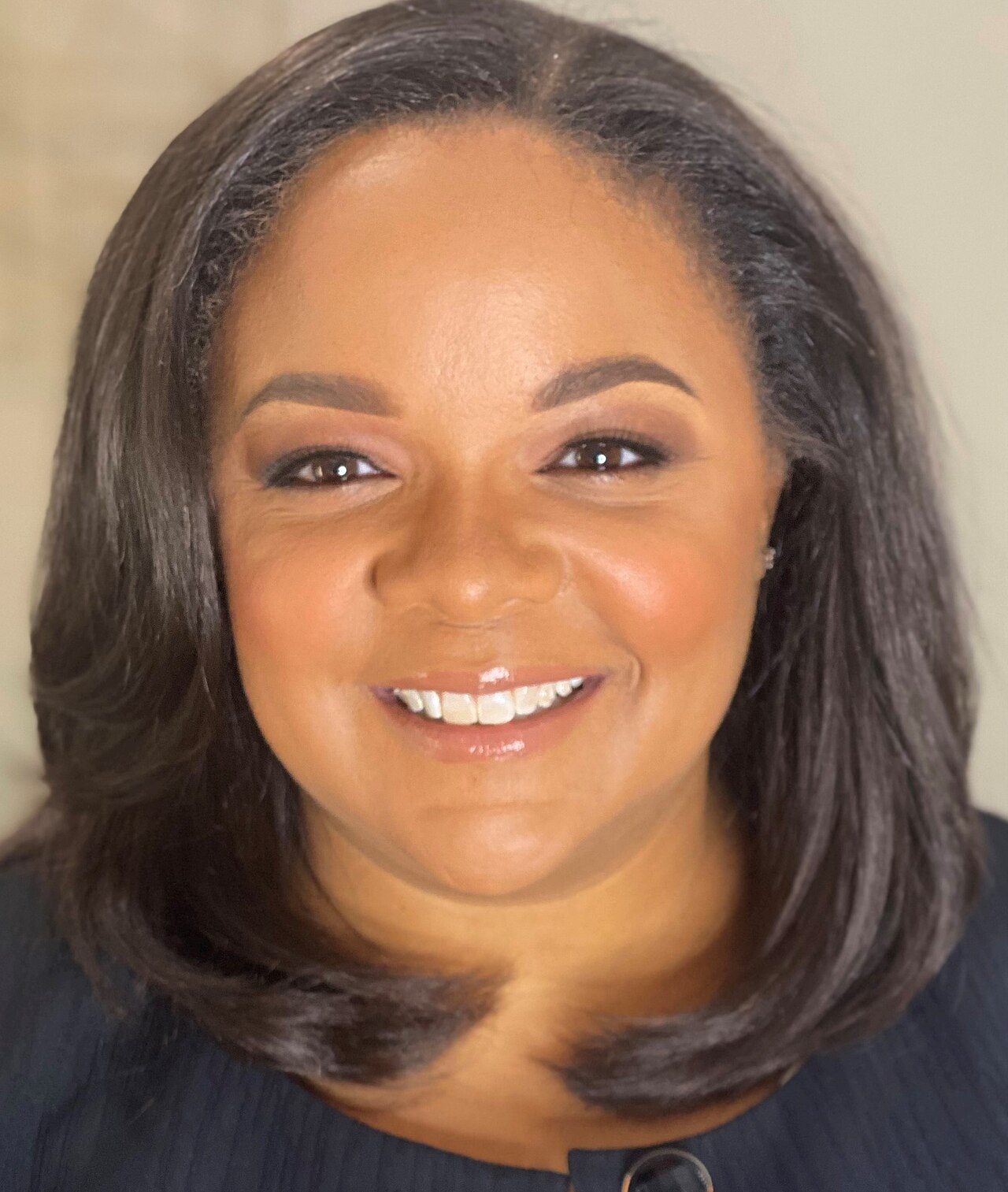
Jia Cobb
Copyright Information: Photo from Wikimedia Commons / Author of Photo: ArchibaldmanOverview
Overview[1]
Jia Michelle Cobb was born in Springfield, Ohio, in 1980. She earned a BA degree from Northwestern University in 2002, and a JD from Harvard Law School — where she was a coordinating editor of the Harvard Law Review — in 2005.
After completing her formal legal education, Cobb worked from 2005-2006 as a law clerk for Judge Diane Wood of the U.S. Court of Appeals for the Seventh Circuit.
Cobb then served as a trial attorney for the District of Columbia’s Public Defender Service from 2006-2012. There, she supervised incoming attorneys and was a member of the Forensic Practice Group.
Cobb taught trial advocacy as an adjunct professor at American University’s Washington College of Law in 2011, and was a faculty member at Harvard Law School’s Trial Advocacy Workshop in 2010 and 2011.
She then worked as an attorney at Relman Colfax, a national plaintiff-side civil-rights law firm, from 2012-2021, becoming a partner with the firm in 2019.
In 2016, Cobb was elected to the Steering Committee of the District of Columbia Bar’s “Criminal Law and Individual Rights Section.”
On June 15, 2021, Democrat President Joe Biden nominated Cobb to serve as a judge on the United States District Court for the District of Columbia. Cobb had previously been recommended for this position by U.S. House Delegate Eleanor Holmes Norton. Cobb’s nomination was confirmed by a 52–45 Senate vote on October 26, 2021, and she received her judicial commission 17 days later, on November 12.
Blocking President Trump’s Call for Terminating the “Humanitarian Parole Program”
On March 25, 2025, the Trump administration announced that it would soon be shutting down a “humanitarian parole program” which the Biden administration had implemented in 2022. Formally known as “Processes for Cubans, Haitians, Nicaraguans, and Venezuelans” (CHNV), this Biden initiative was designed to provide “safe and orderly pathways to the United States” for as many as 30,000 nationals from those four countries each and every month. Beneficiaries of the program — who claimed to be fleeing violence and/or oppression in their homelands — were allowed to enter the U.S. at official ports of entry and were given permission to live and work in the country for a period of two years thereafter.
The United States Citizenship and Immigration Services (USCIS) defines the term “humanitarian parole” as a legal mechanism with the following characteristics:
“Parole allows an individual, who may be inadmissible or otherwise ineligible for admission into the United States, to be paroled into the United States for a temporary period. The Immigration and Nationality Act (INA) allows the secretary of homeland security to use their discretion to parole any alien applying for admission into the United States temporarily for urgent humanitarian reasons or significant public benefit. An individual who is paroled into the United States has not been formally admitted into the United States for purposes of immigration law. Parole is not intended to be used solely to avoid normal visa processing procedures and timelines, to bypass inadmissibility waiver processing, or to replace established refugee processing channels.”
The Trump administration’s call for the termination of the CHNV humanitarian parole program was challenged in a lawsuit filed jointly against the Trump administration by the Coalition for Humane Immigrant Rights, the UndocuBlack Network, and CASA. The case was known as Coalition for Humane Immigrant Rights v. Noem, and Judge Cobb was assigned to preside over it. (NOTE: The name “Noem” refers to the Trump administration’s Secretary of Homeland Security Kristi Noem.)
When the Trump administration made its aforementioned March 25 announcement, the Department of Homeland Security (DHS) warned that all impacted migrants would be given just 30 days — until April 24 — to self-deport before American law-enforcement authorities would begin searching for them. According to an Associated Press report, an estimated 532,000 migrants of Cuban, Haitian, Nicaraguan, and Venezuelan heritage had entered the U.S. through the Biden program.
In an 84-page decision issued on August 1, 2025, Judge Cobb blocked the Trump administration’s attempt to use a process called “expedited removal” to rapidly deport the CHNV migrants — a process which the judge said was in violation of their Fifth Amendment right to due process. According to CBS News: “Unlike immigration court cases, which typically take years to complete due to a backlog of millions of unresolved claims, expedited removal allows officials to more quickly deport migrants who arrived to the U.S. in the past two years. Those placed in that process face summary deportation from the U.S. unless they express concerns of being persecuted in their home countries and prove to an asylum officer that their fear is credible.”
Asserting that foreigners who were impacted by Trump’s expedited-removal initiative “have a weighty liberty interest in remaining here and therefore must be afforded due process under the Fifth Amendment,” Cobb said that “prioritizing speed over all else will inevitably lead the Government to erroneously remove people via this truncated process.”
“This case’s underlying question,” Cobb wrote in her ruling, “… asks whether parolees who escaped oppression will have the chance to plead their case within a system of rules. Or, alternatively, will they be summarily removed from a country that — as they are swept up at checkpoints and outside courtrooms, often by plainclothes officers without explanation or charges — may look to them more and more like the countries from which they tried to escape?”
Further, the judge argued that the Trump administration’s expedited-removal efforts were illegal, and that they raised a “question of fair play.” She lamented, for instance, that the plaintiffs whose original complaint had set the Coalition for Humane Immigrant Rights v. Noem case in motion – a pair of migrants from Cuba and Venezuela — had “played by the rules” to enter the U.S. but were nonetheless being targeted for deportation.
DHS spokesperson Tricia McLaughlin characterized Cobb’s ruling as “lawless” and accused the judge of “flagrantly ignoring the United States Supreme Court which [had previously] upheld expedited removals of illegal aliens by a 7-2 majority.”[2]
Blocking Trump’s Effort to Fire a Federal Reserve Governor
In January 2021, then-President Joe Biden nominated Lisa Cook, a 57-year-old African American economist, to serve on the Federal Reserve’s seven-member Board of Governors — a post for which the nominee was confirmed 16 months later. During her tenure on the board, Cook repeatedly voted with its chairman, Jerome Powell, to stay U.S. interest rates following a period of very high inflation in 2021-22. But Biden’s successor, President Trump — claiming that reduced interest rates would spur economic growth nationwide — criticized the Federal Reserve Board on numerous occasions for not cutting interest rates as the central banks in Europe and the United Kingdom had done.
In an August 15, 2025, letter to President Trump’s Attorney General, Pam Bondi, Federal Housing Finance Agency (FHFA) director Bill Pulte stated that Cook in 2021 had “falsified bank documents and property records to acquire more favorable loan terms, potentially committing mortgage fraud.” Specifically, Pulte claimed that Cook, for that purpose, had claimed each of two separate homes – one in Michigan and another in Georgia — as her primary place of residence in 2021. When Pulte subsequently asked the Department of Justice to investigate the matter, Cook said in a statement: “I learned from the media that FHFA Director William Pulte posted on social media that he was making a criminal referral based on a mortgage application from four years ago, before I joined the Federal Reserve. I have no intention of being bullied to step down from my position because of some questions raised in a tweet.”
In an August 20, 2025 post to his Truth Social online platform, Trump called for Cook to resign immediately from her position with the Federal Reserve.
On August 25, Trump wrote a letter to Cook in which he said: “I have determined that there is sufficient cause to remove you from your position. In light of your deceitful and potentially criminal conduct in a financial matter … I do not have such confidence in your integrity. At a minimum, the conduct at issue exhibits the sort of gross negligence in financial transactions that calls into question your competence and trustworthiness as a financial regulator.” The President then announced publicly that he had gone ahead and fired Cook because of the mortgage fraud allegations.
Cook responded to Trump’s action by issuing a statement that said: “President Trump purported to fire me ‘for cause’ when no cause exists under the law, and he has no authority to do so. I will not resign. I will continue to carry out my duties to help the American economy as I have been doing since 2022.”
On August 28, 2025, Cook filed suit against President Trump, the Federal Reserve Board of Governors, and Jerome Powell, arguing that the President did not have the legal authority to fire her. Cook’s complaint said, in part:
“The unsubstantiated mortgage fraud allegations that allegedly occurred prior to Governor Cook’s Senate confirmation do not amount to ‘inefficiency, neglect of duty, or malfeasance in office,’ nor has the President alleged that they do. Even if the President’s authority to remove a Board member ‘for cause’ encompassed circumstances beyond ‘inefficiency, neglect of duty, or malfeasance in office,’ President Trump does not have the power to unilaterally redefine ‘cause’—completely unmoored to caselaw, history, and tradition—and conclude, without evidence, that he has found it.”
In her filing, Cook requested the issuance of: (a) an order permitting her to keep her job, and (b) a declaration stating that President Trump’s “purported firing of Governor Cook” was both “unprecedented and illegal.”
Cook’s lawsuit was assigned to U.S. District Judge Jia Cobb.
At a court hearing on August 29, Cook’s legal team – accusing the Trump administration of making “vague, unsubstantiated allegations” as part of “an obvious smear campaign” — requested a Temporary Restraining Order. But Judge Cobb made no ruling on that request at this hearing.
On September 9, 2025, Cobb issued a Preliminary Injunction blocking President Trump from firing Cook while her lawsuit made its way through the court system. “The public interest in Federal Reserve independence weighs in favor of Cook’s reinstatement,” Cobb wrote, adding that “President Trump has not identified anything related to Cook’s conduct or job performance as a board member that would indicate that she is harming the board or the public interest by executing her duties unfaithfully or ineffectively.” “The best reading of the ‘for cause’ provision,” wrote Cobb, “is that the bases for removal of a member of the board of governors are limited to grounds concerning a governor’s behavior in office and whether they have been faithfully and effectively executing their statutory duties. ‘For cause’ thus does not contemplate removing an individual purely for conduct that occurred before they began in office.”
In response to Cobb’s ruling, the Trump administration filed a motion for appeal with the United States Court of Appeals for the District of Columbia Circuit, which ruled on September 15 that Cook could not be fired prior to the Federal Open Market Committee meeting which was slated for later that month. On September 18, the Trump administration filed an emergency appeal to have the Supreme Court lift the lower court’s rulings.
On October 1, 2025, the Supreme Court decided that it would not take up the case until after the start of the upcoming new year. On November 12, 2025, it was announced that oral arguments for the case would begin on January 21.
Blocking Trump’s Effort to Deploy National Guard Troops to D.C.
On August 11, 2025, President Trump declared that because of the dire “emergency” of “rampant crime” engulfing the District of Columbia, he would soon be deploying some 2,000 National Guard troops to patrol various key locations in the city. To authorize this move, the President invoked Section 740 of the District of Columbia Home Rule Act, which allowed him to temporarily federalize the officers of the city’s Metropolitan Police Department (MPD) and place them under the control of U.S. Attorney General Pam Bondi. In response, D.C. filed a lawsuit alleging that the prospective National Guard deployment violated the Administrative Procedure Act (APA), the D.C. Home Rule Act, the Emergency Management Assistance Compact (EMAC), the Posse Comitatus Act (PCA), and the Constitution.
On November 20, 2025, Judge Cobb ruled that President Trump lacked the authority to send National Guard troops into D.C. “for the deterrence of crime,” and that the deployment he had initiated in August was “unlawful.” Thus Cobb issued a Preliminary Injunction calling for the removal of those troops, but she paused the decision until December 11 in order to give the Trump administration time to appeal her ruling. “Cobb said that while Trump may be the commander in chief of the Guard,” reported Politico, “his power is constrained by federal laws that limit how those troops can be federalized and deployed, particularly in Washington, D.C., which is controlled by Congress.” In her 61-page ruling, Cobb wrote: “The Court rejects Defendants’ fly-by assertion of constitutional power, finding that such a broad reading of the President’s Article II authority would erase Congress’s role in governing the District and its National Guard.”
After two West Virginia National Guard members were shot in a November 26, 2025 ambush attack near the White House by a man who had come to the United States four years earlier under a Biden-era program that brought in Afghan nationals fleeing the Taliban regime, Trump announced that he would be sending an additional 500 National Guard troops to the nation’s capital.
On December 4, 2025, the D.C. Circuit Court of Appeals temporarily froze Judge Cobb’s ruling of November 20. The National Guard troops could stay in D.C., said the appellate court, while it deliberated on whether or not to pause Cobb’s ruling indefinitely.
Footnotes:
- https://www.fjc.gov/history/judges/cobb-jia-michelle
https://bidenwhitehouse.archives.gov/briefing-room/statements-releases/2021/06/15/president-biden-announces-4th-slate-of-judicial-nominations/
https://www.dcd.uscourts.gov/content/district-judge-jia-m-cobb -
The U.S. Supreme Court upheld the federal government’s authority to use expedited removal procedures against certain noncitizens in a 7-2 decision on June 25, 2020 in the case Department of Homeland Security v. Thuraissigiam.