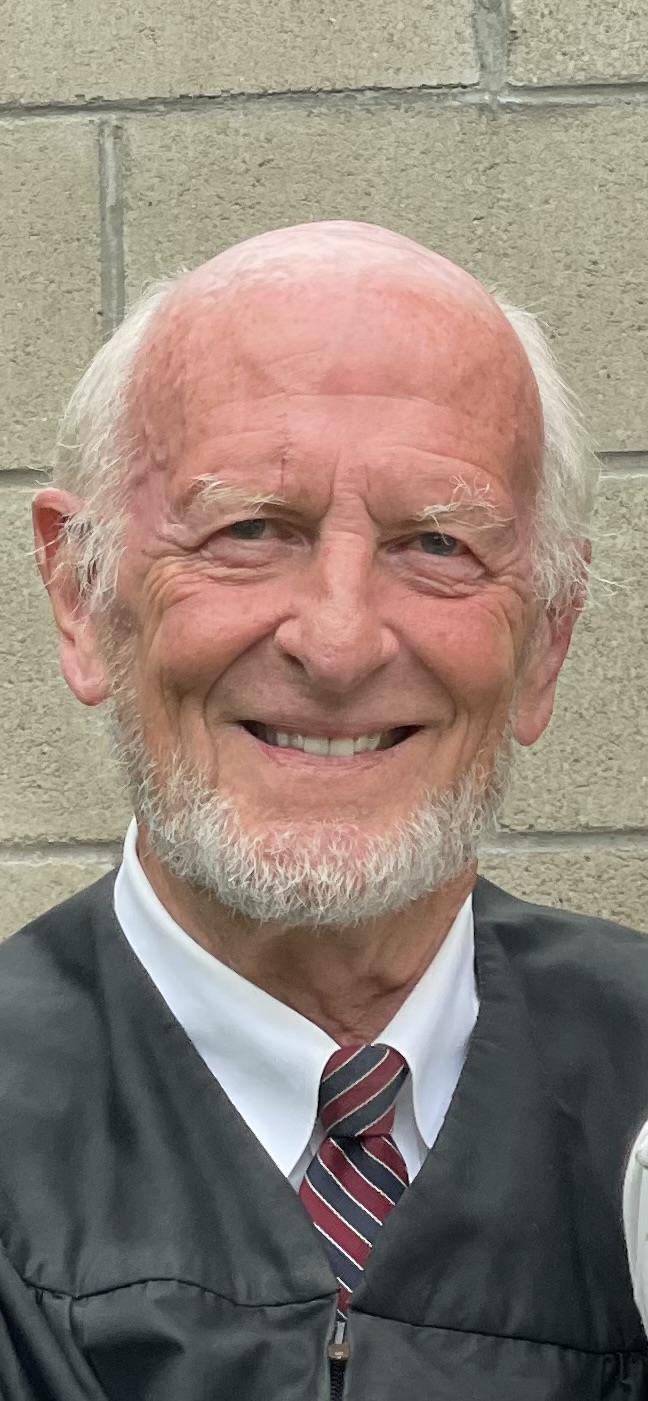
Fred Biery
Copyright Information: Photo from Wikimedia Commons / Author of Photo: Ccjf / Source of Photo: Own workOverview
Overview [1]
Samuel Frederick “Fred” Biery Jr. was born in McAllen, Texas, in 1947. He earned a Bachelor of Arts degree from Texas Lutheran College in 1970, and a Juris Doctor degree from Southern Methodist University in 1973. He served in the United States Army Reserve from 1970 to 1976, where he achieved the rank of E-4.
Biery launched his legal career in 1973 as a private-practice attorney in San Antonio, Texas.
From 1979-1982, he served as a judge in Texas’ Bexar County Court-at-Law.
From 1983-1988, he was a judge in Texas’ 150th District Court.
From 1989-1994, he was a judge in Texas’ Fourth District Court of Appeals.
On November 19, 1993, President Bill Clinton nominated Biery to fill a newly created seat as a judge with the United States District Court for the Western District of Texas. Biery was confirmed on a voice vote of the U.S. Senate on March 10, 1994, and he received his commission the following day. He has remained with that same court ever since, including a stint from 2010-2015 when he was its Chief Judge.
School Prayer Case (2012) [2]
On February 9, 2012, Judge Biery presided over the settlement of Schultz v. Medina Valley Independent School District, a case filed by the parents of two students in that district, who in 2011 had challenged the recitation of sanctioned prayers at school events. The settlement specifically enumerated all instances where prayer could, or could not, take place on campus – e.g., at events like graduation speeches, sporting events, musical performances, etc. — and mandated that staffers be trained to: (a) use proper religious language when speaking to students of faith, and (b) refrain from retaliating against students for their views regarding religion.
Summary of the Case
On May 26, 2011, Americans United for Separation of Church and State collaborated with private counsel to represent the plaintiffs — an agnostic graduating senior at Medina Valley High School, his older brother (a former student at the school), and their parents – in filing a lawsuit against the Medina Valley Independent School District in the U.S. District Court for the Western District of Texas. Judge Biery was assigned to preside over the case.
The plaintiffs claimed that the school district had violated their First Amendment rights as well as the Establishment Clause of the U.S. Constitution by “presenting, sponsoring, encouraging, inviting, or coercing prayers at school and school-sponsored activities and events; displaying and permitting the display of crosses and other religious icons; and retaliating against students who complain[ed] about the unlawful promotion of religion or who decline[d] to participate in religious prayers, practices, or rituals.”
The plaintiffs moved for a Temporary Restraining Order (TRO) and a Peliminary Injunction, in hopes of preventing the school district from including any prayers at its upcoming high-school graduation ceremony scheduled for June 4, 2011. After a hearing on May 31, Judge Biery – explaining that he felt the plaintiffs were likely to succeed on the merits of the case and would suffer irreparable harm in the absence of an Injunction — granted their motion on June 1. His ruling ordered that the graduation proceedings not include any official group prayer, and that the terms “invocation” (the act of calling upon a god, spirit, or force for help or guidance) and “benediction” (a short blessing) not be used at any point during the event.
The school district, in turn, made an emergency interlocutory appeal to a three-judge panel of the Fifth Circuit Court of Appeals, which on June 3, 2011, granted the motion to dissolve the TRO and the Preliminary Injunction. Upon completion of the appeal, the judges explained that they were not persuaded that the plaintiffs were “substantially likely to prevail on the merits, particularly on the issue that the individual prayers or other remarks to be given by students at graduation were, in fact, school-sponsored.” Thus, the Preliminary Injunction was dissolved and the graduation ceremony the following day included prayer as originally planned.
On July 11, 2011, Judge Biery urged both parties in the case to attempt to settle, rather than engage in a lengthy and hostile legal battle. Though the parties agreed to try mediation, they were unable to reach any mutually acceptable agreement by the end of the summer.
The parties were finally able to settle their dispute on February 9, 2012. The Civil Rights Litigation Clearinghouse summarized the agreement as follows:
“Under the terms of the settlement, the school district agreed to stop initiating, soliciting, or directing prayers at school events, displaying religious symbols and texts at schools, and inviting religious speakers to proselytize, or to play any part in writing or editing student graduation speeches. It further agreed to train its staff in how to comply with the agreement, educate students on religious diversity, and refrain from retaliating against or disparaging the plaintiffs. The agreement allowed student-led prayer at events. The court retained jurisdiction to enforce the settlement for ten years … through February 2022.”
Biery’s Bitterness Toward His Critics
During the course of the Schultz v. Medina Valley Independent School District case, Biery was the target of vituperation from numerous people on both sides of the debate. Some of those critics went so far as to issue death threats against Biery, making it necessary for the U.S. Marshal Service to provide the judge with extra protection. At the very end of the February 9, 2012 Order in which Biery announced that an agreement had been reached, he added the following personal statement that addressed those threats:
“To the United States Marshal Service and local police who have provided heightened security: Thank you.
“To those Christians who have venomously and vomitously cursed the Court family and threatened bodily harm and assassination: In His name, I forgive you.
“To those who have prayed for my death: Your prayers will someday be answered, as inevitability trumps probability.
“To those in executive and legislative branches of government who have demagogued this case for their own political goals: You should be ashamed of yourselves.
“To the lawyers who have advocated professionally and respectfully for their clients respective positions: Bless you.”
Blocking Trump’s Deportation of a Young Illegal Alien & His Father
On January 27, 2026, Judge Biery blocked the deportation of a 27-year-old Ecuadorian man named Adrian Conejo Arias and his five-year-old son, Liam Conejo Ramos. Both were illegal aliens who had made asylum claims in the United States before being taken into custody by American immigration officers in Minnesota. Biery ordered the U.S. government to neither deport the pair nor remove them from the court’s jurisdiction while they pursued a legal challenge to their detention.
Several days later, on January 31, 2026, Biery wrote a scathing opinion — replete with overt, politically partisan editorializing — wherein he ordered that the Donald Trump administration release both the boy and his father. Some excerpts:
- “Before the Court is the petition of asylum seeker Adrian Conejo Arias and his five-year-old son for protection of the Great Writ of habeas corpus. They seek nothing more than some modicum of due process and the rule of law. The government has responded.”
- “The case has its genesis in the ill-conceived and incompetently-implemented government pursuit of daily deportation quotas, apparently even if it requires traumatizing children.”
- “Apparent also is the government’s ignorance of an American historical document called the Declaration of Independence. Thirty-three-year-old Thomas Jefferson enumerated grievances against a would-be authoritarian king over our nascent nation. Among others were: ‘(1) He has sent hither Swarms of Officers to harass our People. (2) He has excited domestic Insurrection among us. (3) For quartering large Bodies of Armed Troops among us. (4) He has kept among us, in Times of Peace, Standing Armies without the consent of our Legislatures.’
“‘We the people’ are hearing echos [sic] of that history.
“And then there is that pesky inconvenience called the Fourth Amendment:
“The right of the people to be secure in their persons, houses, papers, and effects, against unreasonable searches and seizures, shall not be violated, and no Warrants shall issue, but upon probable cause, supported by Oath or affirmation, and particularly describing the place to be searched, and persons or things to be seized. […]
“Civics lesson to the government: Administrative warrants issued by the executive branch to itself do not pass probable cause muster. That is called the fox guarding the henhouse. The Constitution requires an independent judicial officer.
“Accordingly, the Court finds that the Constitution of these United States trumps this administration’s detention of petitioner Adrian Conejo Arias and his minor son, L.C.R. The Great Writ and release from detention are GRANTED pursuant to the attached Judgment.
“Observing human behavior confirms that for some among us, the perfidious lust for unbridled power and the imposition of cruelty in its quest know no bounds and are bereft of human decency. And the rule of law be damned.
“Ultimately, Petitioners may, because of the arcane United States immigration system, return to their home country, involuntarily or by self-deportation. But that result should occur through a more orderly and humane policy than currently in place….
“With a judicial finger in the constitutional dike, It is so ORDERED.”
Biery dated his ruling incorrectly as follows: “SIGNED this 31st day of February, 2026.”
In yet another deviation from the norms of judicial writing, the judge included, below his signature at the end of the document, a photo of young Liam Conejo Ramos along with references to the Bible passages Matthew 19:14 and John 11:35.[3] The inclusion of these passages was intended to suggest that President Trump’s willingness to deport a young child like Liam Conejo Ramos was a moral and spiritual abomination.
Footnotes:
[1] https://en.wikipedia.org/wiki/Samuel_Frederick_Biery_Jr.
https://ballotpedia.org/Samuel_Biery
[2] https://pdfserver.amlaw.com/tx/Schultz_v_Medina_Valley.pdf
[3] Matthew 19:14: “Jesus said, ‘Let the little children come to me, and do not hinder them, for the kingdom of heaven belongs to such as these.’”
John 11:35: “Jesus wept.”