Judicial Accountability Project
Judicial Accountability Project
Overview
Click Here for
Introductory Video to the
Judicial Accountability Project
.
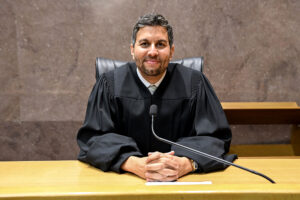
Ali, Amir
Judge, U.S. District Court for D.C.
Alikhan, Loren
Judge, U.S. District Court for D.C.

Bates, John
Judge, U.S. District Court for D.C.

Biery, Fred
Judge, U.S. District Court for the Western District of Texas
Boardman, Deborah
Judge, U.S. District Court for the District of Maryland

Boasberg, James
Judge, U.S. District Court for D.C.
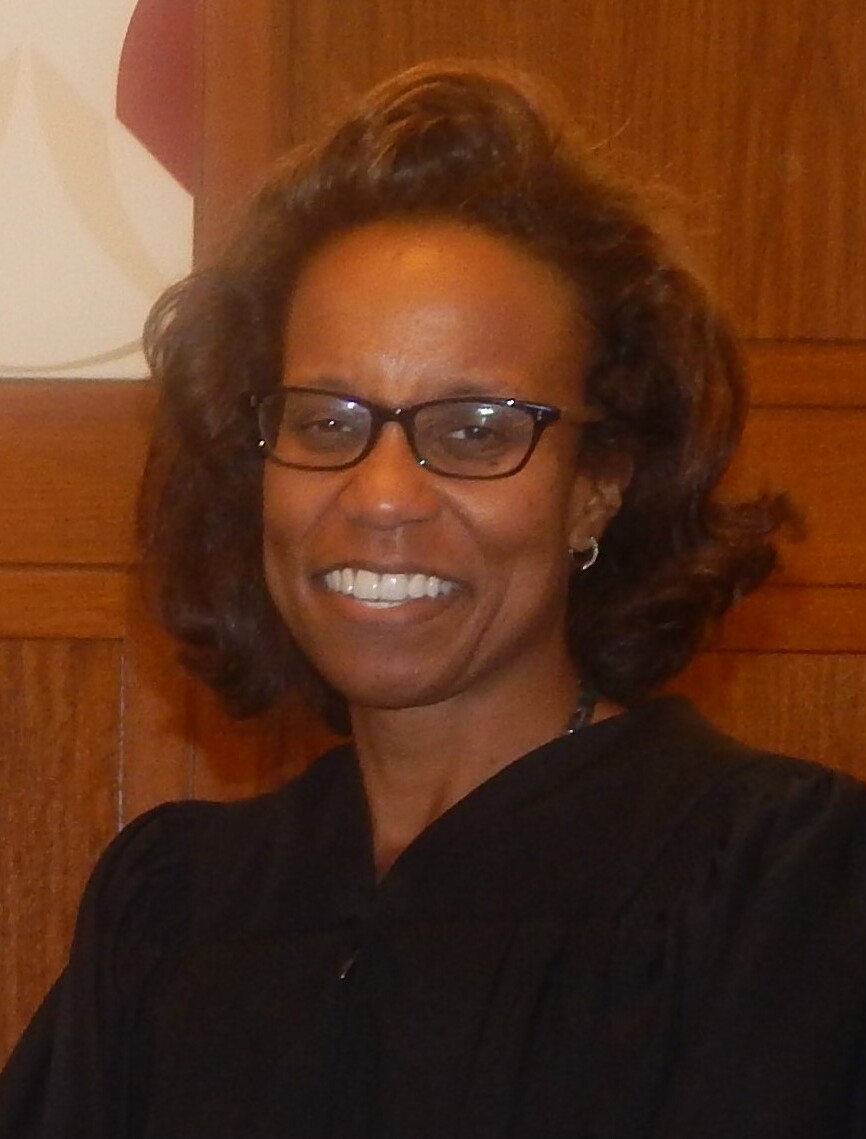
Casper, Denise
Judge, U.S. District Court for the District of Massachusetts

Chutkan, Tanya
Judge, U.S. District Court for D.C.

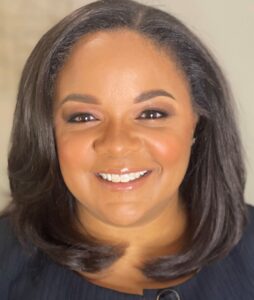
Cobb, Jia
Judge, U.S. District Court for D.C.

Dugan, Hannah
Judge, Milwaukee County Circuit Court
Faruqui, Zia
Magistrate Judge, U.S. District Court for D.C.

Jackson, Amy Berman
Judge, U.S. District Court for D.C.

Jackson, Ketanji Brown
Justice, U.S. Supreme Court

Kasubhai, Mustafa
Judge, U.S. District Court for the District of Oregon
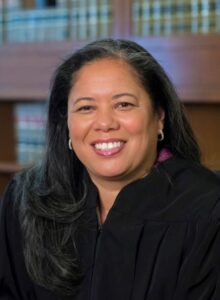
Kelley, Angel
Judge, U.S. District Court for the District of Massachusetts

Kollar-Kotelly, Colleen
Judge, U.S. District Court for D.C.
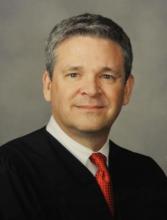
McConnell, John
Judge, U.S. District Court for the District of Rhode Island

Menendez, Katherine
Judge, U.S. District Court for the District of Minnesota

Murphy, Brian
Judge, U.S. District Court for the District of Massachusetts
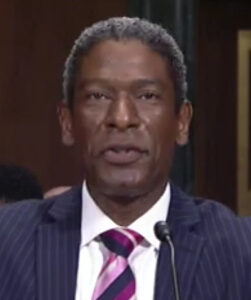
Neals, Julien
U.S. District Court for the District of New Jersey
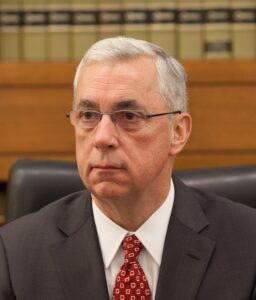
O’Toole Jr., George
Judge, U.S. District Court for the District of Massachusetts
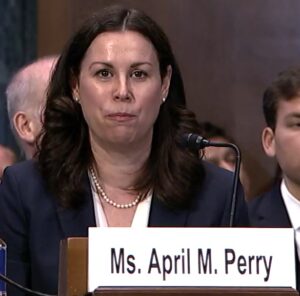
Perry, April
Judge, U.S. District Court for the Northern District of Illinois
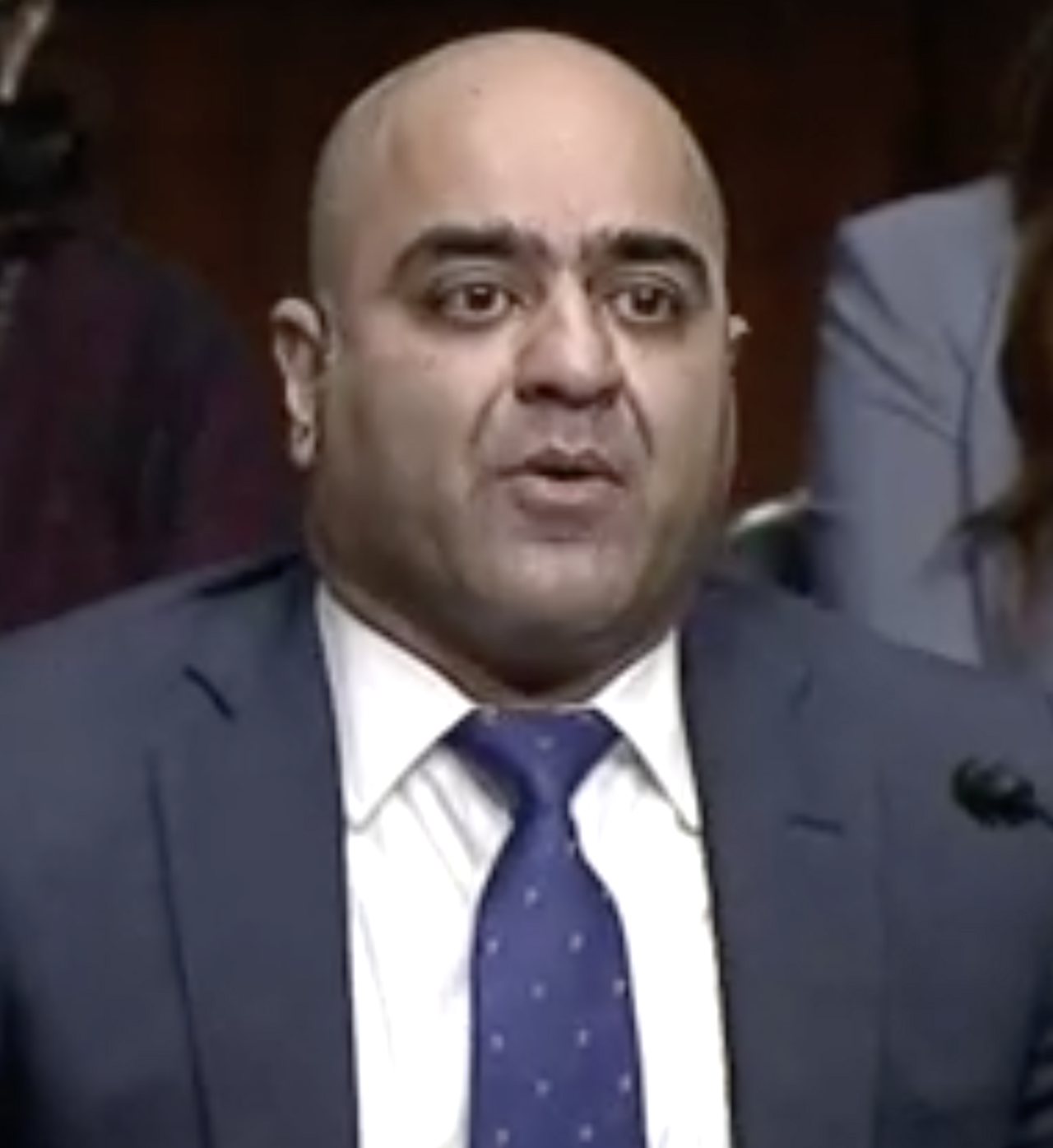
Quraishi, Zahid Nisar
Judge, U.S. District Court for the District of New Jersey
Reinhart, Bruce
Magistrate Judge, U.S. District Court for the Southern District of Florida

Reyes, Ana
Judge, U.S. District Court for D.C.
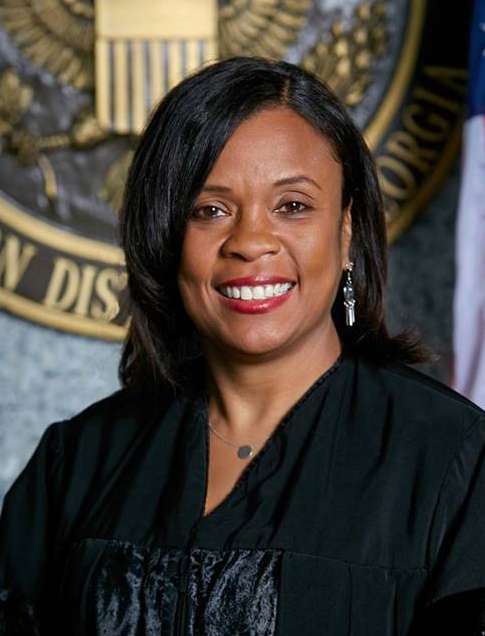
Ross, Eleanor
Judge, U.S. District Court for the Northern District of Georgia

Sooknanan, Sparkle
Judge, U.S. District Court for D.C.

Sotomayor, Sonia
Justice, U.S. Supreme Court

Subramanian, Arun
Judge, U.S. District Court for the Southern District of New York

Talwani, Indira
Judge, U.S. District Court for the District of Massachusetts
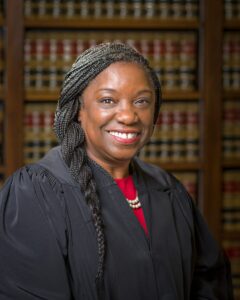
Thompson, Trina
Judge, U.S. District Court for the Northern District of California
Wingate, Henry
Judge, U.S. District Court for the Southern District of Mississippi

Young, William G.
Judge, U.S. District Court for the District of Massachusetts
Introduction
The Judicial Accountability Project is a compendium of profiles that investigate the words and actions of judges who have failed, in one or more ways during the course of their careers as jurists, to perform their professional duties in a manner consistent with the standards articulated in the official “Code of Conduct for United States Judges.” That document declares explicitly that a judge should “refrain from political activity”; “perform the duties of the office fairly [and] impartially”; and “avoid impropriety and the appearance of impropriety in all activities.” Author Robert Alt expands on these themes in a Heritage Foundation report titled “What Is the Proper Role of the Courts?“:
“The proper role of a judge in a constitutional republic is a modest one. Ours is a government of laws and not men. This basic truth requires that disputes be adjudicated based on what the law actually says, rather than the whims of judges. In determining whether a contested law is consistent with the Constitution, judges act within their proper judicial power when they give effect to the original public meaning of the words of the law and the Constitution…. In recent decades, judges have engaged in judicial activism, deciding cases according to their own policy preferences rather than by applying the law impartially according to its original public meaning.”
Among the most frequent and objectionable transgressions of such activist judges are instances where they have willfully:
- usurped the policymaking power that the Constitution assigns exclusively to the Executive Branch, and not to the Judicial;
- usurped the lawmaking power that the Constitution assigns exclusively to the Legislative Branch, and not to the Judicial;
- injected their own personal politics and ideologies into their deliberations and legal rulings; and
- disregarded the laws requiring that they recuse themselves from any case where there is even the slightest question about their potential bias, prejudice, or conflict of interests.
In some cases, the impropriety of a judge’s behavior may be serious enough to warrant a formal reprimand or censure, the latter of which is a more severe disciplinary sanction than the former. A reprimand or censure can be initiated after a lawyer, a litigant, a court staffer, or a member of the public files a complaint with the chief judge of the federal circuit where the offending jurist sits.
In response to more grievous offenses, even harsher consequences may be appropriate. The Constitution of the United States — the self-identified “supreme Law of the Land” — provides vital mechanisms for impeaching and removing from office any elected or appointed officials who choose to abuse the enormous influence they have over the lives and fortunes of the people at large. Even the most powerful individual in the country, the President, can be impeached for misdoings that Article II, Section IV of the Constitution enumerates with specificity: “Treason, Bribery, or Other High Crimes and Misdemeanors.” These same transgressions are likewise identified by the Constitution as impeachable offenses for the “Vice President and all civil Officers of the United States.”
This of course raises the important question of exactly who the nation’s “civil Officers” are — a matter addressed with clarity by Cornell Law School’s Legal Information Institute, which says: “Historical practice […] indicates that federal judges clearly qualify as officers subject to impeachment and removal, as the majority of [impeachment] proceedings have applied to those positions.”[1]
Article III, Section I of the Constitution further addresses the subject of how federal judges must comport themselves in order to keep their jobs: “The judicial Power of the United States shall be vested in one supreme Court, and in such inferior Courts as the Congress may from time to time ordain and establish. The Judges, both of the supreme and inferior Courts, shall hold their Offices during good Behavior.” Most significant among these “inferior Courts” established by Congress are America’s federal District Courts and federal Appeals Courts.[2]
The objective of the Judicial Accountability Project is to bring public attention to the words and actions of judges who fail to demonstrate the “good Behavior” mandated by the Constitution; who fail to carry out their professional duties in a manner that is free of political partisanship, bias, or corruption; and who fail to honor the boundaries that distinguish the power of the judiciary from the powers of the legislative and executive branches. No longer should such judges have free rein to transform themselves, with secrecy and impunity, into veritable oligarchs who stealthily facilitate the advancement of their own personal, radical agendas in preference to the wishes of the nation’s voters as reflected in federal elections.
Overview of America’s Federal District & Appellate Courts & Judges
There are currently 94 federal District Courts in existence nationwide — with at least one such court in each of the 50 U.S. states, plus one each in Washington, D.C. and the United States territories of Puerto Rico, American Samoa, Guam, the Northern Mariana Islands, and the U.S. Virgin Islands. These 94 District Courts are the general trial courts where federal cases are first argued and adjudicated. The District Courts are staffed by 677 active, authorized judges with lifetime appointments — a number that is set by Congress, though temporary vacancies may slightly alter the actual total at any given time. Moreover, there are an additional 500+ judges who have achieved “senior status” — i.e., semi-retirement characterized by lighter caseloads — once the sum of their numerical age plus years-of-service equals 80 or above.
America’s 94 federal District Courts are organized, in turn, into 13 “circuits” that include:
- 12 regional geographic circuits, one of which exclusively encompasses the city of Washington, D.C.; and
- a 13th circuit known as the Federal Circuit Court, which has nationwide jurisdiction for cases involving various civil and criminal offenses; disaccord between states or between residents of different states; and specialized matters like disputes involving bankruptcies, copyrights, patents, and international trade.
All of the circuit courts are officially designated as U.S. Circuit Courts of Appeals — appellate bodies that review decisions originally rendered by the District Courts within their respective geographic domains. These Circuit/Appellate courts comprise the intermediate level of the federal court system — between the trial-level District Courts below, and the U.S. Supreme Court above.
There are currently 179 authorized judges employed in aggregate by the 13 U.S. Circuit Courts. The number of judges affiliated with each of these appellate courts ranges from 6 to 29. When these judges preside over a case, they typically sit in a panel of 3.
Presidents Barack Obama and Joe Biden both nominated many radical, corrupt, politically partisan, and even incompetent individuals to lifetime appointments as federal judges in the nation’s District and Circuit courts, and too many Senate Republicans allowed those judges to be confirmed without a fight.
- Obama appointed 329 federal judges in 8 years, including 55 Circuit Court judges and 268 District Court judges.
- Biden appointed 235 federal judges in 4 years, including 45 Circuit Court judges and 187 District Court judges.
- By way of comparison, President Trump during his first term appointed 231 federal judges in 4 years, including 56 Circuit Court judges and 175 District Court judges.
When District Court Judges Exceed the Bounds of Their Legal Authority
A major recurring theme among certain judges appointed by Democrat Presidents is the enormous effort they have made to expropriate the Executive power of President Donald Trump in particular — a transgression that violates the separation-of-powers principle differentiating the respective roles of the Executive, Legislative, and Judicial branches of government. When judges block presidential policies or Executive Orders — on matters like tariffs, immigration policies, or transgenderism, to name just a few — they are overstepping their authority and interfering with the President’s duty to carry out the political mandate he received from the nation’s voters. As conservative podcaster Matt Walsh has observed regarding what he terms an “out-of-control, unhinged, lawless judiciary”:
“The judiciary has collapsed. It has slid into psychosis. It’s going to destroy the country. It’s going to bring down our whole system of government. These judges are doing whatever they want. They’re claiming absolute power over the country, claiming the power of both the other branches of government for [themselves]. Illegally, unconstitutionally foisting their left-wing radicalism onto the country, undercutting the executive branch, undercutting the legislative branch. Random whack jobs in black robes are sitting on their benches and saying, ‘Well, I personally would prefer if things were this way, and so they have to be, and you all have to listen.’ …
“The judiciary basically doesn’t exist anymore as a functioning part of the government. It’s just a bunch of random judges who are completely out of control, have lost their minds…. [T]his is the real coup. They are … taking over the country and claiming absolute authority and power, and claiming that there’s not a single thing the president can do that they can’t override…. [T]he judiciary is claiming that … the judiciary has an automatic veto over everything that happens. Any law, any executive action, any action at all taken by a president or anyone else in government, the judiciary has an automatic veto over all of it. And … that is not actually how our system of government is set up.”
From the moment Trump first took office as President in January 2017, Democrat/leftwing activists and judges waged an organized political and propaganda campaign attacking him and his agendas with a level of relentless, malevolent vitriol never before seen in American history. And then, when Trump in 2024 was in the midst of a hotly-contested uphill battle aimed at winning a second term in the White House, Democrats — bracing themselves for the possibility that he might succeed – worked feverishly to lay the groundwork for a coordinated response to such a turn of events. That is, they planned an uncompromising strategy of defiant resistance dedicated to discrediting, undermining, sabotaging, or, at the very least, slow-walking the advancement of the Trump agenda by miring it in an endless parade of lawsuits and court proceedings. In July 2024, for instance, Politico reported that:
- “Democratic attorneys around the country are already gearing up for the possibility of 2nd Trump admin by mapping out an aggressive legal strategy to fight him again in court.”
- “The early preparations are an acknowledgment that a second Trump presidency would entail these lawyers filing lawsuit after lawsuit against the federal government.”
And indeed, Trump’s second inauguration in January 2025 was greeted by District Court and Circuit Court judges in liberal jurisdictions across the country going to great lengths to block the very policies upon which he had campaigned — the policies that won him an Electoral College landslide, the first popular-vote majority by a Republican presidential candidate in 20 years, and victory in all 7 of the nation’s major swing states. In their quest to derail Trump’s agendas, his adversaries unleashed an avalanche of injunctions and Temporary Restraining Orders (TROs) — often before the allegedly objectionable policies even had a chance to take effect.[3]
The Aims, Tactics, & Allies of Leftwing District Court Judges
Over the years of Trump’s first and second terms as President, District Court judges in various jurisdictions across the United States have tried to block his efforts to:
- authorize immigration agents to apprehend people inside courthouses and places of worship
- speed up and broaden the scope of deportations of illegal aliens
- withhold federal funds from sanctuary cities
- stop migrants from remaining in the United States while they pursue asylum claims
- end birthright citizenship for illegal aliens and temporary visitors
- invoke the Alien Enemy Act of 1798 as justification for deporting Venezuelan Tren de Aragua terrorists
- enact steep cuts to the U.S. budget through the Department of Government Efficiency (DOGE)
- fire unnecessary or unproductive federal workers
- impose tariffs on foreign goods without congressional approval
- keep “transgender women” out of women’s prisons
- deny the provision of taxpayer-funded “gender-affirming care” for prison inmates
- withhold federal funds from hospitals that offer gender surgeries to minors
Notably, District Court judges are not authorized to issue rulings or injunctions regarding such matters on their own initiative. Rather, a lawsuit must first be brought before a court by a plaintiff with legal standing who claims to have been harmed, or to be under the imminent threat of harm, as a result of an actual or prospective government action. In short, every court order or injunction that has sought to block a Trump administration policy or Executive Order grew out of a specific legal challenge initiated by means of a complaint or lawsuit filed by one or more plaintiffs. Such plaintiffs may include individuals, law firms, U.S. state governments or attorneys general, civil rights groups, advocacy organizations, etc.
Among the most significant entities involved in the leftwing effort to thwart the advancement of the Trump administration’s priorities has been Democracy Forward, an alliance consisting of at least 280 leftwing advocacy groups and public-sector unions. The Democracy Forward board of directors is chaired by Marc Elias, an attorney who was once a partner at the Perkins Coie LLP law firm and served in 2016 as general counsel for Hillary Clinton’s presidential campaign. On behalf of Mrs. Clinton and the Democratic National Committee, Elias in April 2016 hired the investigative firm Fusion GPS to conduct opposition research on then-Republican presidential candidate Donald Trump. Fusion GPS, in turn, hired former British spy Christopher Steele to produce the infamous “Steele dossier” alleging conspiracies of election-altering collusion between Russian government agents and the Trump campaign – while also claiming egregious acts of malfeasance and moral debauchery by Trump himself. Ultimately, the Steele dossier was discredited beyond doubt as a monumental hoax.
How Nationwide Injunctions Undermine American Democracy
In what became an increasingly common practice during the Trump era, the Preliminary Injunctions and Permanent Injunctions issued by federal District Court judges did not limit the reach of their rulings solely to the plaintiffs and defendants involved in those cases, but instead were structured as Nationwide Injunctions capable of impeding the advancement of presidential policies or Executive Orders everywhere — and affecting everyone — in the United States. Consider the following facts:
- Former U.S. Attorney General William Barr has stated: “[F]ederal courts do not appear to have issued any nationwide injunctions during the first 175 years of the Republic. The first documented nationwide injunction issued in 1963 from the D.C. Circuit. The absence of nationwide injunctions [prior to that] does not reflect an unwillingness to issue injunctions against the government. Quite the contrary. In 1937 … Attorney General Homer Cummings reported that lower courts had issued thousands of injunctions against New Deal programs. But, in keeping with the unbroken English tradition and two centuries of American law, those injunctions bound the government only with respect to the parties to those cases. The government continued to enforce New Deal programs against others. For example, Cummings reported that courts issued more than 1,600 injunctions against a particular agricultural tax.”
- During the 38 years between 1963-2001, some 31 Nationwide Injunctions were issued to pause or block the policies of the Kennedy, Johnson, Nixon, Ford, Carter, Reagan, George H.W. Bush, and Clinton administrations. After that, 6 Nationwide Injunctions were issued during the George W. Bush presidency, followed by 12 during the Obama era, and then 14 during the first three years of Biden.
- Those numbers were dwarfed by the 64 Nationwide Injunctions issued in 18 District Courts during the 4 years of President Trump’s first term — 59 of them by Democratic-appointed federal judges.
- In the first 2 months of Trump’s second term, there were 127 lawsuits filed by activists, government employees, and others challenging his Executive Orders and Executive Actions.
- By the summer of 2025 during the first half-year of Trump’s second term, federal judges had issued TROs or Preliminary Injunctions in nearly 80 separate cases—a figure described by City Journal as “far surpassing anything seen before.” By that summer as well, no fewer than 35 of the first 40 Nationwide Injunctions issued against Trump’s policies and Executive Orders had been handed down by judges from just 5 of the nation’s 94 District Court jurisdictions.
In the era of ever-more commonplace Nationwide Injunctions, it became exceedingly easy for any one of the 677 judges in America’s 94 federal District Court jurisdictions to be able to dictate policy for the entire country — even if that policy conflicted with the agendas of a President who may have been elected to advance a very different vision. Indeed, opponents of the President could in essence overrule him by finding just a single judge – anywhere in the country – willing to rule in their favor. Theoretically, 676 other federal District Court judges might favor the presidential policy in question, but one judge in a single jurisdiction could issue a Nationwide Injunction to block it in every city, town, and hamlet in the country.
Obviously, Nationwide Injunctions, by their very nature, encourage the practice of “judge-shopping” or “forum-shopping” by plaintiffs who know exactly which judges or courts will be receptive to their legal arguments and policy demands. It is an arrangement that clearly permits a relatively small coterie of federal judges to issue a constellation of edicts reflecting their own personal opinions on various government policies — and thereby transform themselves into a veritable army of judicial despots and oligarchs imposing upon the American population a brand of tyranny not authorized in any way by the Constitution. It is also an assault on the U.S. electorate, repeatedly substituting the preferences of a single judge in a single jurisdiction for the wishes of scores of millions of voters hailing from every corner of the country.
In April 2025, Republican Congressman Pat Harrigan of North Carolina pointed out the injustice of such an arrangement: “A single district judge should not have the power to grind an entire administration to a halt. These nationwide injunctions are not about justice, they are about politics. They let one unelected official block policies that were voted for by millions of Americans.”
In the same vein, President Trump put it this way in June 2025:
“I was elected on a historic mandate. But in recent months, we’ve seen a handful of radical-left judges effectively try to overrule the rightful powers of the President to stop the American people from getting the policies that they voted for in record numbers. It was a grave threat to democracy, frankly, and instead of merely ruling on the immediate cases before them, these judges have attempted to dictate the law for the entire nation. In practice, this meant that if any one of the nearly 700 Federal judges disagreed with the policy of a duly elected President of the United States, he or she could block that policy from going into effect or at least delay it for many years, tie it up in the court system. This was a colossal abuse of power, which never occurred in American history prior to recent decades. And we’ve been hit with more nationwide injunctions than were issued in the entire 20th century together.”
Former U.S. Attorney General William Barr, whose remarks regarding the history of Nationwide Injunctions were cited above, has offered numerous well-reasoned, highly thoughtful critiques of such injunctions and their profound ramifications. Following are a few of those critiques:
- “[F]undamentally, nationwide injunctions violate the Separation of Powers. Article III vests federal courts with ‘the judicial power’ to decide ‘Cases’ or ‘Controversies.’ As the Supreme Court has instructed, that means concrete disputes among individual parties. […] Limiting judicial power to resolving concrete disputes between parties, rather than conducting general oversight of the Political Branches, ensures that courts do not usurp their [the Political Branches’] policymaking functions.”
- “Courts issuing Nationwide Injunctions often describe themselves as ‘striking down’ or ‘invalidating’ a law. Although we have probably all used such terms as shorthand, the truth is that courts have no authority to ‘strike down’ laws. In our system, they resolve only disputes between parties.”
- “[N]ationwide Injunctions inflate the role of individual district judges within the Judiciary. The Constitution empowers Congress to create lower federal courts, and in designing a system of [94] judicial districts and 12 regional circuits, Congress set clear geographic limits on lower-court jurisdiction. In our system, District-Court rulings do not bind other judges, even other judges in the same district. This system has many virtues. It creates checks and balances within the judiciary itself and encourages what former D.C. Circuit Judge Harold Leventhal called ‘percolation’ — the process by which many lower courts offer their views on a legal issue before higher courts resolve it. This process of percolation is not just a good idea; it is the very embodiment of our common-law tradition. In that great tradition, governing legal principles emerge from a scatter-shot of precedent that involves multiple cases, over many years, decided by multiple judges working through legal issues and refining their views. When a Nationwide Injunction issues against the government, it short-circuits that process. Because such injunctions prevent enforcement against anyone anywhere, they overshadow related litigation in other courts. After all, even if the government prevails in every other case, a nationwide injunction still prevents all enforcement. It thus gives a single judge the unprecedented power to render irrelevant the decisions of every other jurisdiction in the country.”
- “Nationwide injunctions not only allow District Courts to wield unprecedented power, they also allow District Courts to wield it asymmetrically. When a court denies a Nationwide Injunction, the decision does not affect other cases. But when a court grants a Nationwide Injunction, it renders all other litigation on the issue largely irrelevant. Think about what that means for the Government. When Congress passes a statute or the President implements a policy that is challenged in multiple courts, the Government has to run the table—we must win every case. The challengers, however, must find only one district judge—out of an available 600—willing to enter a Nationwide Injunction. One judge can, in effect, cancel the policy with the stroke of the pen.”
- “[N]ationwide Injunctions undermine public confidence in the Judiciary. When a single judge can freeze policies nationwide, it is not hard to predict what plaintiffs will do. In Professor Bray’s memorable phrase, they shop [for a sympathetic judge] ’til the statute drops.”
- “Of course we value uniformity in our legal system. But we already have ways to achieve it—usually, through review by the Supreme Court on a writ of certiorari after an issue has percolated through the lower courts. When the Supreme Court issues a nationwide ruling in that posture, we have more confidence in it due to the preceding efforts of the lower courts. Nationwide Injunctions turn that process on its head. They treat the first case as if it will be the last.”
- “I raise the problem of Nationwide Injunctions as a matter not of partisanship, but the rule of law. One can easily imagine a future Administration’s policies—say, on climate change or employee rights—freezing under Nationwide Injunctions for years on end. Imagine, for example, if a new Administration were to abandon a “zero tolerance” policy on immigration offenses only to see a District Court order it back in place. One could draw up countless other scenarios.”
Recent Efforts to Limit Nationwide Injunctions & Judge-Shopping
In February 2025, Republican Congressman Darrell Issa of California sponsored the No Rogue Rulings Act (NRRA), which stipulated that: (a) all District Court injunctions would only apply to the particular parties involved in a given case and would not be permitted to affect federal policies nationwide; and (b) if a case involved parties from multiple states located in different court circuits, it would be assigned to a panel of three randomly selected judges rather than to a lone, handpicked judge whose ultimate verdict could be predicted in advance with virtual certainty. Such a panel could issue a Nationwide Injunction only if at least two of the three judges were to rule that it would be appropriate to do so. Some excerpts from the NRRA:
“(a) [N]o United States district court shall issue any order providing for injunctive relief, except in the case of such an order that is applicable only to limit the actions of a party to the case before such district court with respect to the party seeking injunctive relief from such district court and non-parties represented by such a party acting in a representative capacity pursuant to the Federal Rules of Civil Procedure.
“(b) If a case is brought by two or more States located in different circuits challenging an action by the executive branch, that case shall be referred to a three-judge panel [and] the selection of judges shall be random […] The three-judge panel may issue an injunction [a Nationwide Injunction] that would otherwise be prohibited under subsection (a), and shall consider the interest of justice, the risk of irreparable harm to non-parties, and the preservation of the constitutional separation of powers in determining whether to issue such an order.”
In a similar spirit, Senate Republicans in March 2025 introduced the Judicial Relief Clarification Act (JRCA), a bill that sought to end the issuance of Nationwide Injunctions entirely, and to require all District Courts in the country to restrict their rulings only the cases before them, with their specific plaintiffs and defendants, rather than try to impose the terms of any injunction on the entire nation at large. Any attempt to extend the reach of an injunction to the United States as a whole, the bill added, should do so by following “the class action process.” The JRCA read, in part, as follows:
“No court of the United States … shall issue any order, including an injunction, vacatur, stay, temporary restraining order, declaratory relief, or equitable relief, that purports to restrain the enforcement against a non-party or compel action in favor of a non-party with respect to any statute, regulation, order, executive action, or similar authority, unless the court determines the non-party is represented by a party acting in a representative capacity pursuant to the Federal Rules of Civil Procedure.”
In March 2025 as well, the office of Senate Judiciary Committee Chairman Chuck Grassley produced a Fact Sheet explaining that the JRCA:
- “forbids federal courts from issuing sweeping relief against the government to persons not before the court—[thereby] ending the practice of universal [nationwide] injunctions and diminishing the incentive to forum shop for a sympathetic judge”;
- “requires parties seeking universal relief against the government to use the class action process to show that class-wide relief is proper”;
- “amends the Administrative Procedure Act (APA) and Declaratory Judgment Act to clarify that courts may only issue relief under those statutes to parties before the court.”
Then, in a landmark June 2025 decision in Trump v. CASA, Inc., the Supreme Court stepped into the debate and ruled that Nationwide Injunctions likely violate the Federal Judiciary Act of 1789 — the law that established the structure of America’s federal court system by creating the Supreme Court, the District Courts, and the Circuit Courts. This 2025 decision stemmed from a dispute regarding a then-recent Executive Order titled “Protecting the Meaning and Value of American Citizenship,” in which President Trump had called for an end to the practice of conferring birthright citizenship upon children born in the United States to parents who are illegal aliens or temporary visitors.
Traditionally, advocates of unconstrained birthright citizenship have justified their position by citing the U.S. Constitution’s 14th Amendment, which says that “all persons born or naturalized in the United States, and subject to the jurisdiction thereof, are citizens of the United States and of the State wherein they reside.” The Trump administration, however, maintains that the phrase “subject to the jurisdiction thereof” means that the Amendment does not apply to people residing in the country illegally, or merely passing through as visitors or tourists. But rather than rule on the constitutionality or the merits of Trump’s birthright citizenship order, a 6-3 majority of Supreme Court Justices simply concluded that federal District Court judges lacked the authority to issue Nationwide Injunctions on any matter whatsoever.
While rendering that decision, however, the Justices simultaneously suggested that Nationwide Injunctions could in essence be replaced by: (a) class action lawsuits, or (b) administrative challenges:
- (a) Under class actions, judges are empowered to broaden the scope of a case from a handful of people to thousands, or even millions, claiming that a particular presidential policy or Executive Order has either harmed them already or will likely harm them in the future.[4] As Oyez.org explains: “Justice Samuel Alito authored a concurring opinion, joined by Justice Thomas, warning that lax enforcement of third-party standing requirements and class certification procedures could create loopholes that undermine the Court’s holding against universal injunctions. [And] Justice Brett Kavanaugh authored a concurring opinion explaining that while universal injunctions are improper, plaintiffs may still seek classwide preliminary relief under Rule 23(b)(2) or ask courts to set aside agency rules under the Administrative Procedure Act …”
- (b) Administrative challenges can be filed via the Administrative Procedure Act — a 1946 statute that allows those who view a particular government policy or action as objectionable, to argue that it consists of elements that are in some way “arbitrary,” “capricious,” irrational, excessive, unconstitutional, illegal, contrary to evidence, or marred by procedural errors. A judge who agrees with such an assessment can then simply “set aside” the policy in question — a measure that traditionally has invalidated it all across the United States.
Following the Supreme Court’s June 2025 decision stating that federal District Court judges largely lacked the authority to issue Nationwide Injunctions, the judges were quick to begin framing their subsequent rulings as class action matters instead. As USA Today reported on July 22, 2025:
“Judges have already begun certifying classes of plaintiffs challenging the Trump administration in the month since the high court’s decision in late June. The same day as [the Court’s] ruling, the American Civil Liberties Union filed a nationwide class-action lawsuit against Trump’s birthright citizenship order in New Hampshire before the same judge who ordered the nationwide injunction in the CASA case. […]
“In another case in Washington, D.C., three nonprofits challenged a Trump proclamation issued on Inauguration Day that disallowed immigrants from remaining in the country while pursuing asylum claims. On July 2, U.S. District Judge Randolph Moss declared anyone affected by Proclamation 10888 a class and overturned it.”
Additional Resources
“Judicial Accountability Project” Launch Video
By The David Horowitz Freedom Center
February 2026
We Will Hold Bad Judges Accountable: Why it’s time for a Judicial Accountability Project
By Daniel Greenfield
Judicial Accountability Project – Executive Congressional Report
By