DTN.ORG Home DTN.ORG User's Guide Search DTN.ORG Complete Database Contact DTN.ORG Officials Moonbat Central

       INDIVIDUALS     VIEW LIST OF ALL INDIVIDUALS

RESOURCES

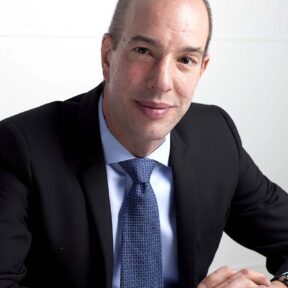
ANTHONY ROMERO Printer Friendly Page
ACLU Struggling With Infighting
By Carl Limbacher
December 8, 2005
Romero's Visual Map
 

  • President of American Civil Liberties Union


Born in New York City to Puerto Rican parents, Anthony D. Romero was named president of the American Civil Liberties Union (ACLU) in September 2001, just a week before the 9/11 terrorist attacks on the World Trade Center and the Pentagon. As of early 2004, the ACLU (which was founded in 1920) had nearly 400,000 members and supporters. It handles almost 6,000 court cases annually from its offices in nearly every American state. The ACLU is part of the “legal left” and works in concert with radical, anti-capitalist, anti-American organizations like the National Lawyers Guild and the Center for Constitutional Rights to hack away at the fabric of America’s Constitutional framework.

Asserting that “[l]eading the ACLU [is] a life’s dream and aspiration come true,” Romero shares the values and objectives of this organization that has been in the vanguard of efforts to weaken American security in the post-9/11 era. For example, The ACLU has supported terrorists like Sami al-Arian, the North American head of Palestinian Islamic Jihad. Since 9/11, the ACLU has led a coalition of civil liberties groups to promote non-cooperation with the Department of Homeland Security in implementing the provisions of the Patriot Act. When the INS and Justice Department instituted a program requiring males visiting the U.S. from Arab and Muslim nations to register with the Bureau of Citizenship and Immigration Services, the ACLU organized protests against what it called this “discriminatory” policy. It similarly protested an FBI anti-terrorism initiative to count and document every mosque in America. In a 2002 federal lawsuit naming Secretary of Transportation Norman Mineta as a defendant, the ACLU challenged a new Aviation Transportation Security Act policy prohibiting non-citizens from working as airport security screeners. 

In 2005 Romero was pleased when, after years of incessantly accusing the U.S. military of abusing the captured terrorists and enemy combatants imprisoned in Guantanamo Bay, the ACLU’s public-relations battering ram finally pounded a weary, much-maligned Pentagon into submission. Joseph Farah’s G2 Bulletin reported that according to “astonished” U.S. military sources, the Pentagon permitted ACLU lawyers to sit in on interrogations of the al Qaeda and Taliban enemy combatants being held in Guantanamo; in the majority of cases, these attorneys advised the prisoners that they were under no obligation to answer military interrogators’ questions. Said one exasperated military source, “It’s as if they [the detainees] were [merely] shoplifters in the U.S. The lawyers may have left by now, but the damage is done. We’re sending guys [attorneys] down to interrogate on [the] taxpayer’s dime for absolutely no reason now.” 

According to the G2 Bulletin, this development was part of the Pentagon’s recent bid to brighten the dark image that Romero's ACLU, in its quest to discredit America’s anti-terrorism measures, had painted of Guantanamo Bay. Seeking to mollify critics, the Pentagon began phasing out the use of Army interrogators in Guantanamo and replacing them with some from the Navy. In July 2005 the Pentagon also appointed Marine Corps Col. Dwight Sullivan, who formerly had spent six years working for the ACLU, to be chief defense counsel for the military tribunals at Guantanamo. When Sullivan was named to this post, Romero had these kind words to say about him: “Dwight Sullivan will bring renewed energy to the defense team at a critical time in the proceedings. He uniquely possesses substantial knowledge of military law and deep commitment to civil liberties.”

Exactly who were the individuals whose civil liberties Sullivan would be safeguarding so vigorously, in compliance with Romero's wishes? There were four: (a) David Hicks (a.k.a. Mohammed Dawood), an Australian-born member of Lashkar-I-Taiba, a violent, al Qaeda-affiliated group of Kashmiri terrorists headquartered in Pakistan. After the 9/11 attacks, Hicks was in the area of Kandahar, Afghanistan, where he was captured in December 2001 and charged with having fought alonside the Taliban against American and Northern Alliance forces; (b) Salim Hamdan, who managed to find work as Osama bin Laden’s driver and bodyguard, and who was captured in Afghanistan in late 2001; (c) Ali Hamza al-Bahlul, a key al Qaeda propagandist and also a bin Laden bodyguard, who produced recruitment and motivational videos for the organization; these videos glorified the murder of Americans; and (d) Ibrahim al-Qosi, a Sudanese accountant who served variously as a cook, driver, and bodyguard for bin Laden, and who helped funnel money to al Qaeda for explosives and weapons.

An attorney with a history of public-interest activism, Romero presided over the ACLU’s most successful membership drive ever, garnering some 75,000 new members during his first year at the organization’s helm. He is the ACLU's sixth executive director, and the first openly gay man to fill that role. Prior to joining the ACLU, Romero led the Ford Foundation's Human Rights and International Cooperation Program, which became, under his leadership, Ford’s largest grant-making unit. Romero is a strong supporter of racial and ethnic preferences for minorities in business and academia, the gerrymandering of voting districts along racial lines, taxpayer-funded abortion-on-demand, expanded rights and privileges for illegal aliens, and the radical feminist and gay agendas. Romero was also the Ford Foundation’s Program Officer for Civil Rights and Racial Justice for nearly five years. Moreover, he spent two years leading a Rockefeller Foundation effort to plan future strategies in civil-rights advocacy.

Romero is a graduate of Stanford University Law School and Princeton University's Woodrow Wilson School of Public Policy and International Affairs. He sits on several not-for-profit boards and is a member of the Council on Foreign Relations and the New York State Bar Association.

In July 2007, the Capital Research Center reported: “With the help of the American Civil Liberties Union, aircraft maker Boeing is being sued by three suspected al-Qaida operatives transported by the CIA to Arab countries for interrogation … The lawsuit alleges a Boeing subsidiary helped the intelligence agency fly the detainees to Egypt and Morocco knowing they would be tortured by authorities there under its controversial ‘rendition’ program. ACLU executive director Anthony Romero said U.S. companies should not profit from a program that is ‘unlawful and contrary to core American values,’ and that such businesses ‘should be held legally accountable.’ The action was brought under the Alien Tort Statute using a legal technique perfected by the Center for Constitutional Rights …”


Since Monday, February 14, 2005 --Hits: 137,017,808 --Visitors: 22,071,732

Copyright 2003-2009 : DiscoverTheNetwork.org